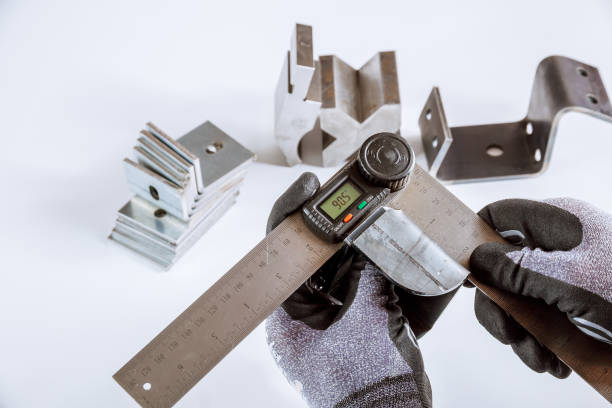

Every custom project has its own story. Whether you are building a prototype, refining a part for production, or crafting something unique, the choice of CNC machining services plays a big role in how smoothly things go. The right partner gives you more than just a finished component. They give you peace of mind, knowing your design is being handled with precision and care.
At Licht Technology, we understand that every project is different, and choosing the right CNC service can feel overwhelming. This guide will walk you through what to look for, what questions to ask, and how to set your project up for success.
Key Takeaways
- A good CNC partner should offer both technical capabilities and clear communication.
- Material selection, tolerances, and scalability are essential when choosing a shop.
- Value-added services like finishing, inspection, and prototyping can save time and costs.
- Building a collaborative relationship often leads to better project outcomes.
- Testing with a small run first can reduce risks before scaling up production.
Understanding Your Project Needs
The first step in choosing CNC machining services is knowing exactly what your project requires. Ask yourself:
- What material am I working with? (Aluminum, stainless steel, plastics, or something more advanced)
- How complex is my design?
- Do I need a prototype, a small batch, or ongoing production?
- What tolerances and finishes are critical for success?
Being specific helps your CNC partner provide an accurate quote and ensures they can deliver the precision your project needs.
Evaluating Technical Capabilities
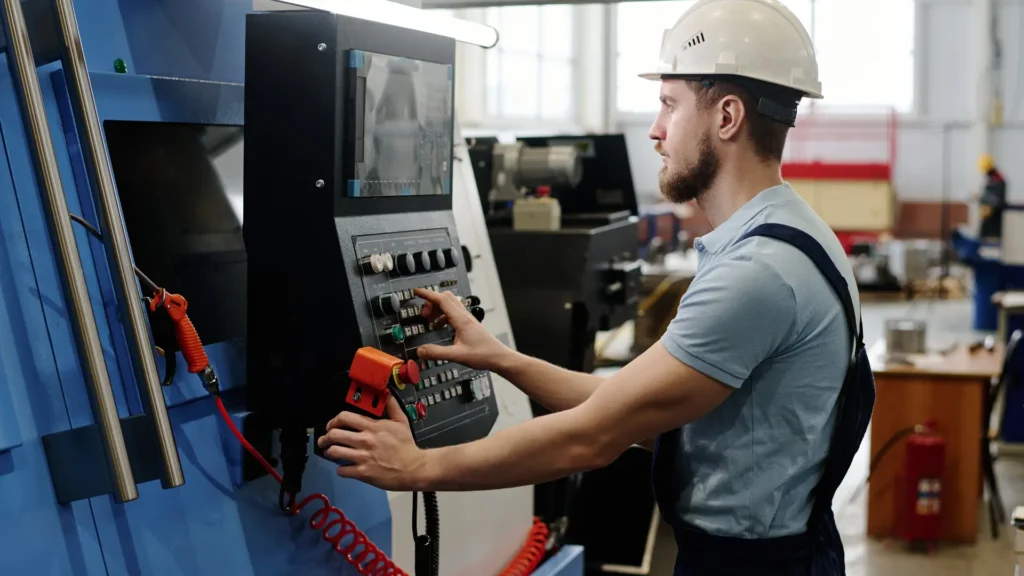
Not every CNC shop has the same equipment. Some specialize in three-axis machines, while others work with advanced five-axis systems that handle complex geometries with ease. If your design includes intricate cuts, tight radii, or multiple angles, you will need a shop with the right equipment.
It is also worth asking about value-added services. Shops that offer finishing, anodizing, polishing, or inspection help you keep the entire process under one roof. This saves time and reduces the chance of errors.
Checking Quality and Reliability
High precision work requires consistent quality. A reliable CNC provider should have strong quality control systems in place. Ask about certifications such as ISO 9001 or AS9100. Review their tolerance capabilities and see if they can provide samples of previous work.
Another key point is repeatability. Your project might start small, but if you scale up production, you will want every part to match. Strong inspection methods, such as coordinate measuring machines (CMM), ensure consistency.
Communication and Support
Clear communication makes the difference between a smooth project and a stressful one. A good CNC machining partner will take the time to review your design, ask clarifying questions, and suggest improvements for manufacturability.
Ask for a transparent quote that breaks down material, tooling, and finishing costs. Lead times are just as important. Make sure you know how quickly they can turn around a prototype or deliver a full order when needed.
Balancing Cost and Value
It may be tempting to go with the lowest quote, but the cheapest option is not always the most reliable. Instead, weigh the long-term value. A slightly higher upfront cost often pays off when you factor in fewer delays, fewer rejected parts, and a smoother workflow.
If you are considering overseas services, be sure to factor in shipping, customs, and communication barriers. Sometimes a local shop can save you more in the long run.
Testing and Scaling
Before going into full production, start with a prototype or a pilot run. This allows you to test for fit, function, and finish. Use this stage to refine the design and confirm the shop’s ability to meet your needs. Once you are confident, scaling up becomes much easier.
Conclusion
Choosing the right CNC machining services is about more than just finding someone who can cut metal. It is about finding a partner who understands your vision, offers the right technology, and values precision as much as you do. At Licht Technology, we are proud to support custom projects of all sizes with the expertise and care they deserve.
If you are planning your next project, take the time to define your needs, evaluate capabilities, and test with a smaller run first. A little preparation goes a long way in ensuring success.
Frequently Asked Questions
How do I know if a CNC machining service is right for my project?
Look for experience with your material, the right machinery, and strong communication. Checking reviews and certifications can also help.
What industries rely on CNC machining?
CNC machining is widely used in aerospace, automotive, medical devices, consumer products, and industrial equipment.
How long does it take to complete a custom CNC project?
A simple prototype can be completed in just a few days, while more complex parts with multiple finishing steps may take a few weeks.
What factors affect CNC machining costs?
Material choice, part complexity, tolerances, finishing requirements, and batch size all influence the final price.
Can CNC machining handle both metals and plastics?
Yes. CNC machines can work with a wide range of materials, including aluminum, steel, brass, titanium, and engineering plastics like PEEK and Delrin.